· Updated · 10 min
Virtual Game Night Ideas for Friends: 15 Easy Ways
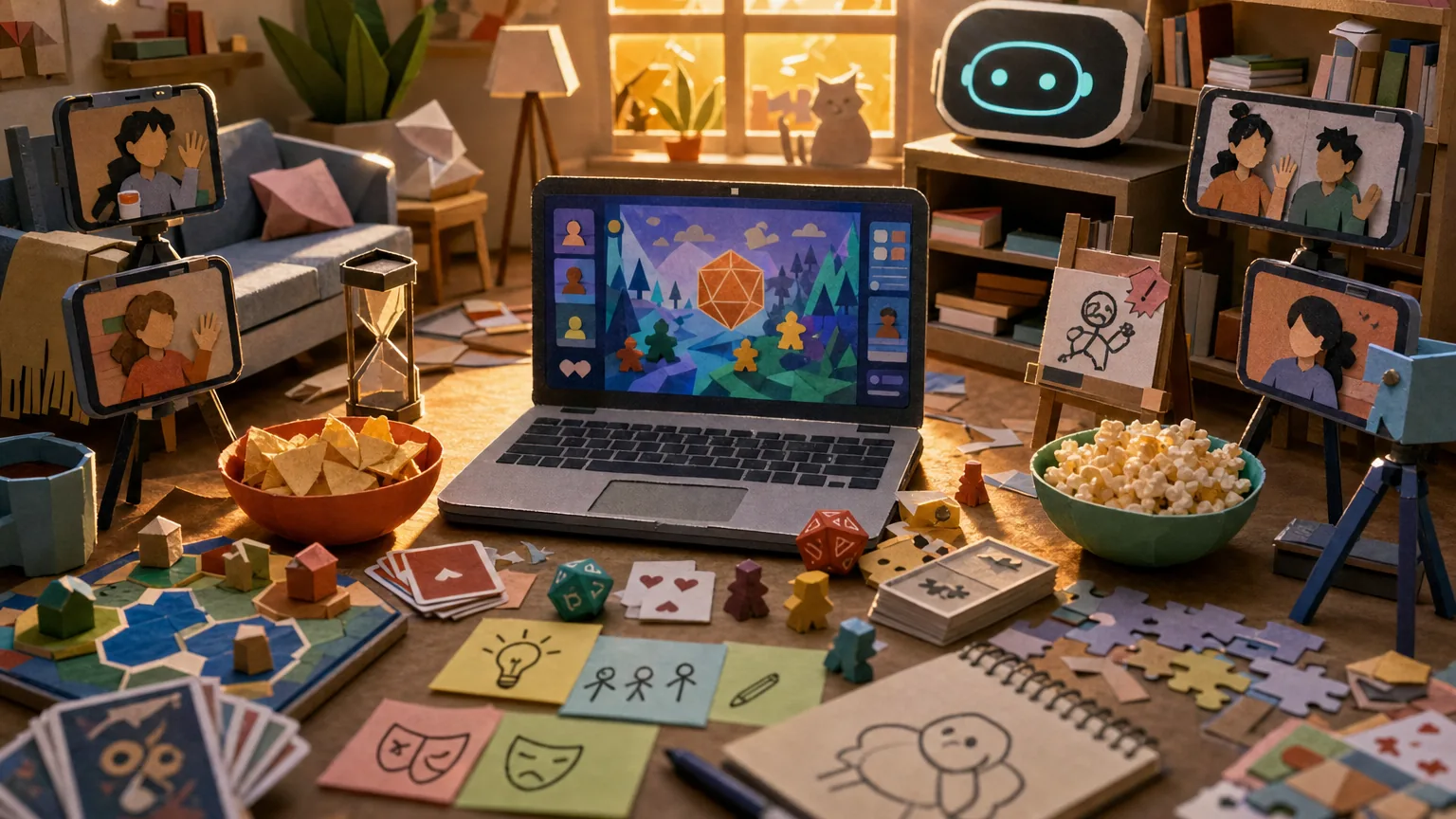
The easiest virtual game night ideas need nothing but a video call or group chat: trivia with custom categories, Would You Rather, Never Have I Ever, Two Truths and a Lie, charades over video, story chains and word games. Keep rounds short and let everyone answer at once. Here are 15 ideas.
This guide gives you 15 low-prep formats that work for mixed groups. Some are classic, some are creative, and one of them uses an AI host so nobody has to keep the room moving by hand.
What makes a virtual game night actually fun?
A good online game night is less about the game itself and more about how quickly people can get into it. If the setup is long, the energy drops. If only one person gets to talk at a time, the rest drift off. If a game depends on perfect internet or a lot of explaining, it gets messy fast.
The best formats usually have these traits:
- Easy to explain in one minute
- Fun with 3 people or 10+
- Works by voice, chat, or both
- Doesn’t punish people for joining late
- Keeps turns moving
- Gives quieter players a way in
Here’s a quick comparison of a few common setups:
| Format | Best for | Prep level | Energy |
|---|---|---|---|
| Trivia night | Competitive groups | Low | Medium |
| Would You Rather | Mixed groups | Very low | Medium |
| Story games | Creative friends | Low | High |
| Guessing games | Bigger calls | Low | High |
| AI-hosted party games | Groups that need structure | Very low | High |
15 easy virtual game night ideas
1. Trivia with custom categories
Trivia is still one of the easiest ways to get everyone involved. The trick is to keep the categories broad enough that nobody feels excluded. Mix pop culture, music, movies, random facts, and a few silly questions.
To keep it lively:
- Use short rounds
- Let teams answer in chat if speaking feels slow
- Add one “wildcard” category
- Keep score lightly if your group likes competition
2. Would You Rather
This works especially well when people are tired or just want something low effort. Ask questions that spark opinions, not arguments. Good questions are weird, funny, or surprisingly personal in a harmless way.
Examples:
- Would you rather only eat sweet food or only salty food?
- Would you rather be famous online or anonymous but rich?
- Would you rather always be 10 minutes early or 10 minutes late?
3. Never Have I Ever
A classic for a reason. It gets people talking fast and works well over video call because nobody needs materials. Keep the tone playful and avoid making it awkward for people who don’t want to overshare.
A simple version:
- Each person says one statement
- Anyone who has done it raises a hand or types in chat
- Move quickly so the pace stays up
4. Story chain
Start a story with one sentence, then each person adds one line. It sounds simple, but it often becomes the funniest part of the night. This works well for creative groups and doesn’t require any prep.
Tip: set a timer for each turn so the story doesn’t stall.
5. Guess the song from the first few seconds
Music games are great if your group has a shared taste. Play a short clip, then let people guess the song or artist. If you want to avoid copyright issues in a casual call, use songs everyone already knows and keep it informal.
6. Emoji interpretation
Send a string of emojis and ask the group to guess the phrase, movie, place, or feeling. It’s simple, funny, and works well in chat-heavy groups.
Example:
- 🐍⚡️🏰 = a wizard school vibe
- 🌧️☕📚 = cozy rainy-day mood
- 🚗💨🍟 = fast food run
7. Photo scavenger hunt
Give everyone 2 minutes to find something in their room and show it on camera. You can make it silly, nostalgic, or themed.
Ideas:
- Something blue
- Something older than you
- Something you bought on impulse
- Something that tells a story
8. Two Truths and a Lie
This one works best with friends who know each other a little, but not too much. It’s easy to learn and gives people a reason to ask follow-up questions.
Keep the statements believable. If the lie is too obvious, the round ends too fast.
9. Charades over video
Charades can work online if you keep the prompts simple and the turns short. Use categories like actions, movie titles, or everyday objects. It helps if the host can keep the pace moving.
Best for:
- Small to medium groups
- Friends who don’t mind acting silly
- Calls where people are comfortable on camera
10. Team name battle
Before the game starts, ask each team to pick a name. Make it funny, dramatic, or slightly absurd. It sounds minor, but a good team name makes people more invested immediately.
Examples:
- The Buffering Legends
- Mic Drop Club
- The Late Joiners
- Ctrl Alt Defeat
11. Hot takes round
This is not a debate night. It’s a quick-fire format where everyone shares a harmless opinion and the group reacts. The goal is energy, not winning.
Good prompts:
- Pineapple on pizza: yes or no?
- Best season of the year?
- Is cereal a meal?
12. Memory chain
One person starts with a sentence, and each player has to repeat the whole chain before adding one new item. It gets harder fast and usually ends in laughter.
Example:
- I packed a hat.
- I packed a hat and a spoon.
- I packed a hat, a spoon, and a rubber duck.
13. Mystery roleplay
This is perfect if your group likes stories more than scores. Give everyone a role, a setting, and a simple goal. Then let the conversation unfold.
It works best when the game host can react in real time, keep the story moving, and adjust the mood if the group gets stuck.
14. Quick-fire word games
Word games are great for mixed groups because they’re easy to join mid-call. Try categories, rhyming, associations, or “name three” challenges.
A few easy formats:
- Name three things in a category
- Say a word that starts with the last letter of the previous word
- Finish the phrase before the timer runs out
15. AI-hosted party games
If you want something that feels more alive than a static list of questions, an AI-hosted game can do a lot of the pacing for you. Instead of one person trying to run the whole evening, the game can react, ask follow-up questions, and keep the group moving.
That matters in mixed groups, because not everyone wants the same thing. Some people want silly prompts. Some want a story. Some just want to join in without learning rules.
A setup like Whisper Games is useful here because it supports voice and chat modes, works for small and large groups, and includes more than one style of play. You can go from trivia to truth-or-dare to mystery-style games without rebuilding the whole night around a single mechanic.
How to choose the right format for your group
Not every group needs the same kind of energy. If your friends are chatty, story games work well. If people are tired after work, keep it light and low-pressure. If the group includes some shy players, use formats where chat answers or turn-based play are enough.
A simple way to choose:
- For fast laughs: Would You Rather, Never Have I Ever, hot takes
- For bigger groups: Trivia, emoji games, scavenger hunts
- For creative friends: Story chain, mystery roleplay
- For mixed energy levels: AI-hosted games with flexible pacing
A few hosting tips that make a big difference
You don’t need a perfect setup. You just need enough structure so nobody has to guess what happens next.
- Start on time, even if not everyone has joined yet
- Pick one host, even if the game is casual
- Keep rounds short
- Use chat for backup answers
- Don’t over-explain rules
- Leave room for a second game if the group wants more
If you’re hosting for friends in different places, time zones, or moods, the best choice is often the one that asks the least from everyone and still feels active.
FAQ
What games can you play on a video call?
Trivia, charades, Two Truths and a Lie, Never Have I Ever, Would You Rather, guess-the-song and story chains all work on Zoom, FaceTime or Google Meet without extra tools.
What games can you play over text?
Word games, 20 Questions, Never Have I Ever over text, Truth or Dare over text and emoji puzzles. Keep a simple turn order so the chat does not get messy.
How do you keep a virtual game night fun?
Keep it to 60–90 minutes, use games where everyone answers at the same time, and switch formats every 15–20 minutes. Short rounds beat long rule explanations.
Can I play AI games with friends remotely?
Whisper Games runs on one device, so for remote play one person shares the audio on the call, or everyone plays in chat mode. It is the simplest way to get a host that keeps the round moving.
Final thought
The best virtual game night ideas are the ones that let people relax, talk, and laugh without a lot of setup. Whether you go with trivia, story games, or an AI-hosted format, the goal is the same: keep everyone included and keep the night moving.
If you want a low-prep option that can host the room for you, Try Whisper Games →.
Ready to play?
Download Whisper Games for free and start your first AI-hosted game.