· Updated · 8 min
How to Host a Game Night with Friends at Home
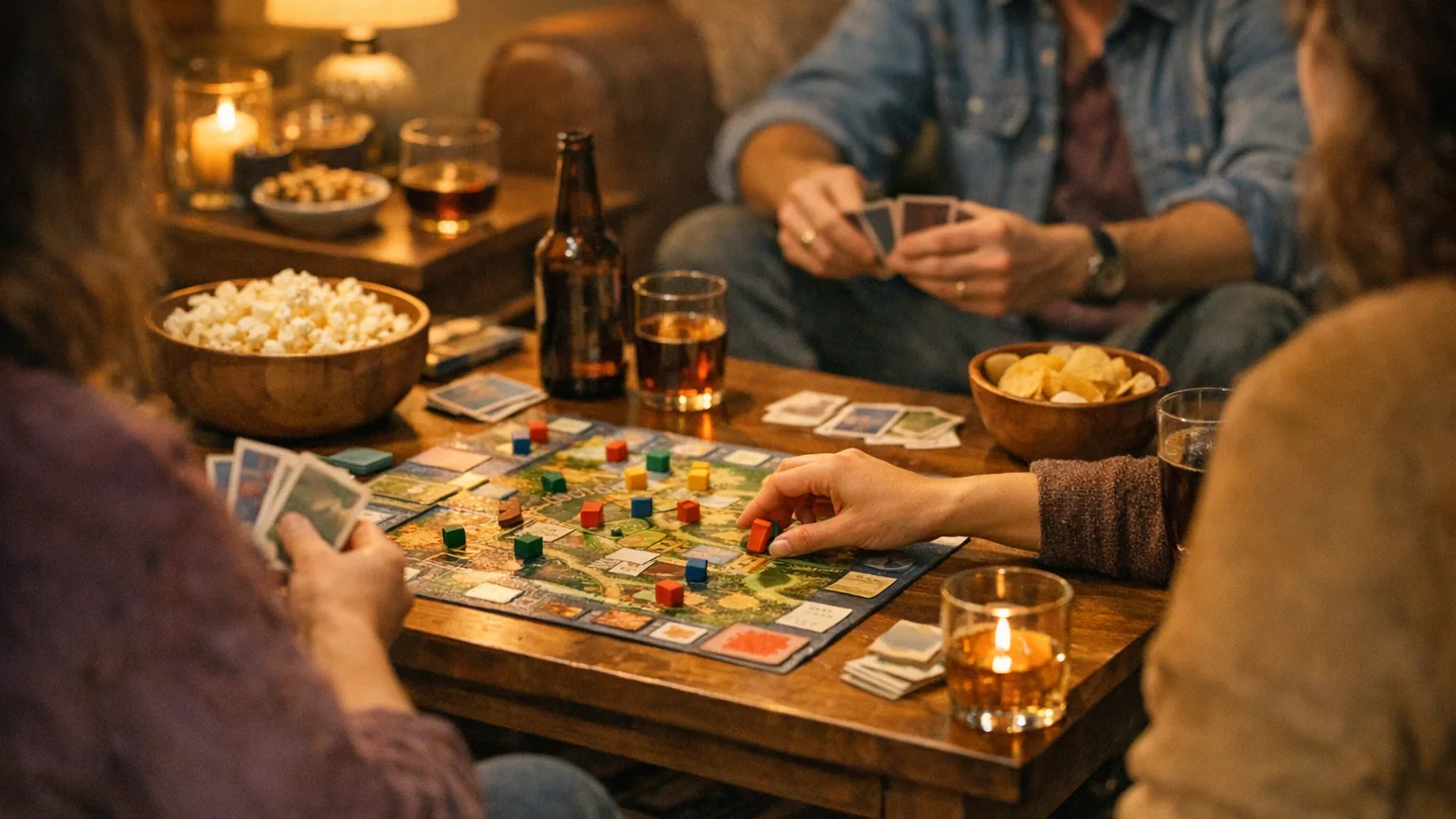
To host a game night with friends at home, pick the mood, invite a group that fits your space, prepare two or three easy games, and start with the simplest one as soon as people arrive. Keep snacks within reach, explain rules in one sentence and switch games before the energy drops. Here is the full plan.
The best home game nights have a simple rhythm. People arrive without stress, the first game starts quickly, and nobody spends half the evening figuring out rules. If that sounds like the kind of night you want, this guide will help you set it up.
Start with the kind of night you want
Before you pick games or snacks, decide what sort of evening you are hosting. That one choice makes everything else easier.
A few common game night moods
- Casual hangout: low-pressure, lots of chatting, simple games
- Competitive night: scoring, teams, a little more energy
- Party night: loud, fast, social, easy to jump in and out
- Cozy night: smaller group, drinks or tea, slower pace
- Mixed group: friends who know each other well plus a few newer faces
If your group includes people who do not all know each other, choose games that help with conversation first. If everyone already knows each other, you can go straight to more playful or chaotic modes.
Keep the setup simple
A game night works best when the space feels inviting, not staged. You do not need a perfect table or fancy decorations. You just need a few things in place.
A quick home setup checklist
- Enough seating for everyone
- A clear surface for cards, drinks, or phones
- Good lighting
- A charger or power strip nearby
- Water and a few snacks within reach
- A place to put coats, bags, and shoes
If people can settle in quickly, the night starts better. It sounds small, but it matters.
Make the room easy to use
Try to avoid a setup where one person has to stand up every five minutes to fetch things. Put the basics close by. If you are using a phone-based game, make sure the group can see and hear what is happening without crowding one screen.
Choose games that fit your group size
One of the easiest ways to lose momentum is picking a game that does not match the room. A game that feels perfect for four people may drag with eight. A fast group game may feel awkward with just two.
Here is a simple way to think about it:
| Group size | Best fit | What to avoid |
|---|---|---|
| 2–3 players | Conversation games, couple games, story-based play | Long setup, large-team formats |
| 4–6 players | Most party games, trivia, word games | Very quiet or overly complex games |
| 7–12 players | Fast rounds, social games, prompts, team play | Slow strategy games with lots of waiting |
If you want a flexible option, pick something that supports both touch and voice, so people can join in however they like. That helps when the room is mixed: some guests want to talk, others want to tap and keep moving.
Build a game flow that keeps the night moving
A good game night has a shape. It does not need a strict schedule, but it should not feel random either.
A simple flow that works well
- Welcome and warm-up
- First easy game
- Main game or two
- A lighter round or funny reset
- Open ending for chatting or one last game
Start with something that gets people talking fast. This is especially useful if guests are arriving at different times. You want the first game to be easy enough that nobody needs a long explanation.
Then move into the game or mode that carries the night. After that, a shorter round helps reset the energy before people leave or switch to hanging out.
Keep the first game very easy
The first game sets the tone. If it is too complicated, people relax less. If it is too simple and boring, the night never really starts.
Good first games usually have these traits:
- Rules can be explained in under a minute or two
- Everyone can join without special preparation
- Turns move quickly
- People can laugh even if they are not trying hard
This is where a flexible party game app can help, especially one with an AI game master that adapts to the group instead of forcing the group to adapt to the game. When the game can react in real time, you spend less time organizing and more time playing.
Plan for different energy levels
Not every group wants the same pace all evening. Some people arrive ready to go. Others need a bit of time.
A few pacing tips
- Start with lighter prompts before more personal games
- Mix fast rounds with slower ones
- Do not stack three intense games in a row
- Let people skip a round if they need a breather
- Switch up the format if the room gets quiet
If the energy dips, do not force it. A short funny round, a word game, or a quick trivia mode can bring the group back without making things feel heavy.
Snacks, drinks, and small comforts matter
You do not need a full spread. But a game night goes smoother when people do not have to ask for every small thing.
A good mix is usually enough:
- One salty snack
- One sweet snack
- Water
- One or two drink options, if that fits your group
Also think about practical comfort. If people are sitting for a while, give them space to put down drinks safely. If the room is warm, crack a window. If the group is on the couch, make sure everyone can still see the game.
Make sure everyone stays involved
A good host keeps the room balanced. You do not need to manage every detail, but you should notice when someone is getting left out.
Easy ways to include everyone
- Ask quieter people a direct but low-pressure question
- Use games with shared prompts instead of long solo turns
- Split into pairs or teams when the group gets too large
- Rotate who answers first
- Choose modes that work for both talkative and shy players
This matters even more when you have a mixed group. The goal is not to make everyone perform. It is to make it easy for everyone to join.
If you want less prep, use a game that adapts
Some nights are better when the host does not have to do much beyond starting the game. That is especially true if you are tired, short on time, or hosting on a weeknight.
Whisper Games is built for that kind of night. It can guide the group, respond to answers, and keep the pace moving across different moods and group sizes. You can play in voice mode or use touch if that feels easier. That makes it a handy option when you want the night to feel fresh without spending an hour planning.
A simple host checklist
Before people arrive, run through this quick list:
- Pick the main game or two
- Clear a bit of space
- Charge the phone or tablet
- Set out snacks and drinks
- Decide whether you want voice mode or touch mode
- Think about the first 10 minutes
That last point is the most important. If the first 10 minutes are smooth, the rest of the night usually follows.
FAQ
What do you need for a game night at home?
Enough seating, snacks and drinks within reach, two or three games that fit your group size, and a phone or speaker if you use an app. You do not need a big board-game collection.
What are the best games for a game night with friends?
Easy social games such as Never Have I Ever, Truth or Dare, trivia and 20 Questions start fast. For bigger groups, see our party games for large groups.
How long should a game night last?
Two to three hours is a good default. Plan around 20–40 minutes per game and keep one short game in reserve for when energy dips.
How do you host a game night for beginners?
Choose games that can be explained in one sentence, play one practice round, and let an app or AI host handle rules and prompts so you can play instead of moderating.
Final thoughts
A fun game night at home does not need a perfect plan. It needs a clear mood, an easy setup, and games that help people connect without making the host do all the work. Keep it simple, keep it moving, and leave room for the group’s energy to shape the night.
If you want a low-stress way to keep the room engaged, Try Whisper Games →.
Ready to play?
Download Whisper Games for free and start your first AI-hosted game.